History · Political Evolution
Ancient IndianDynasties
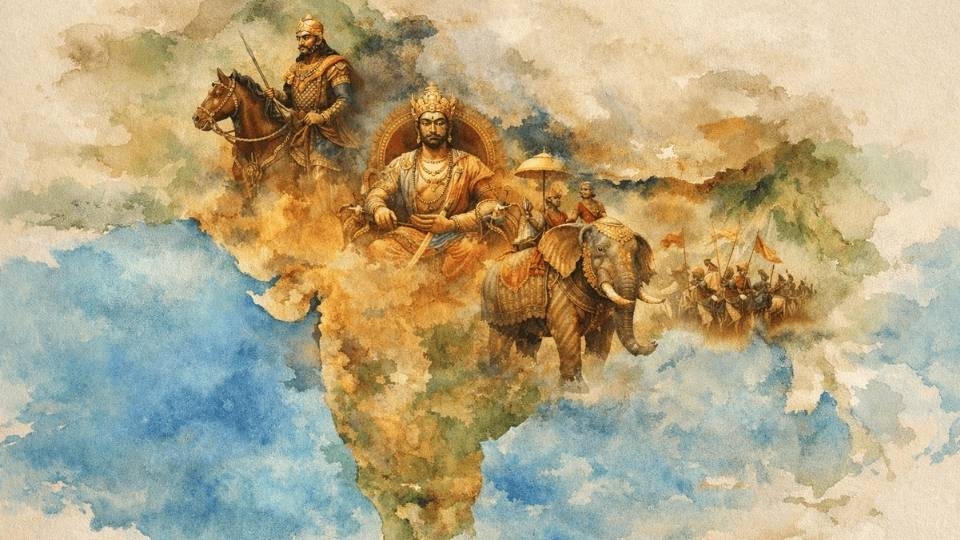
A polity-by-polity survey of how Indian kingdoms rose, governed, and transformed—grounded in inscriptions, coins, and texts. From the Mahajanapadas to the late medieval Deccan across nearly two millennia.
About This Course
Course Overview
Ancient Indian Dynasties is a fifteen-hour course covering Indian political history from c. 600 BCE to c. 1400 CE. It examines fifteen major dynasties through inscriptions, coins, and texts. It analyzes how each empire/kingdom addressed the fundamental challenges of governance.
Through fifteen lectures, learners will study the rise and transformation of major dynasties that shaped the subcontinent's administrative traditions, territorial configurations, and civilizational character.
The curriculum traces the evolution from early kingdoms to sophisticated imperial formations. Beginning with the Magadhan ascendancy and the Mauryan unification of the subcontinent, the course examines how successor states—the Satavahanas, Kushanas, Guptas, and Vakatakas—inherited, adapted, and refined governance models.
The second half addresses regional consolidation under the Chalukyas, Pallavas, Rashtrakutas, Pratiharas, Palas, and Cholas, revealing how political power dispersed into distinct yet interconnected spheres of influence.
Upon completion, learners will be able to identify the administrative innovations of each dynasty, understand mechanisms of imperial expansion and fragmentation, recognize patterns of religious and cultural patronage, and situate these polities within the broader arc of Indian civilization.
Course Content
Curriculum
15 lectures · 15 hours
01
Introduction
+
Introduction
An introduction to the historiographical frameworks, primary sources, and methodological approaches used in studying ancient Indian polities.
02
Mahajanapadas and the Magadhan Empire
+
Mahajanapadas and the Magadhan Empire
The sixteen great states, republican and monarchical systems, and Magadha's rise to dominance under the Haryanka, Shishunaga, and Nanda dynasties.
03
Mauryan Empire: Foundation
+
Mauryan Empire: Foundation
The establishment of the first pan-Indian empire, Chandragupta's conquests, Kautilya's Arthashastra, and the consolidation under Bindusara.
04
Mauryan Apex
+
Mauryan Apex
Ashoka's reign, the Kalinga war, Dhamma policy, rock and pillar edicts, and the administrative machinery of the Mauryan state.
05
Satavahanas
+
Satavahanas
Post-Mauryan Deccan, Satavahana origins, Gautamiputra Satakarni, trade networks, and the synthesis of northern and southern traditions.
06
Kushanas
+
Kushanas
Yuezhi migrations, Kanishka's empire, Gandharan art, Buddhist patronage, and the Silk Road connections.
07
Gupta and Vakataka Dynasty
+
Gupta and Vakataka Dynasty
Samudragupta's conquests, Chandragupta II, the Gupta-Vakataka alliance, cultural efflorescence, and the concept of a "Golden Age."
08
Chalukyas
+
Chalukyas
The three Chalukya lineages, Pulakeshin II's resistance to Harsha, temple architecture at Aihole and Pattadakal, and Deccan politics.
09
Pushyabhuti Dynasty
+
Pushyabhuti Dynasty
Thanesar to Kanauj, Harshavardhana's empire, Xuanzang's account, religious assemblies, and the post-Gupta north Indian polity.
10
Pallava Dynasty
+
Pallava Dynasty
Pallava origins, Mahendravarman and Narasimhavarman I, Mamallapuram rock-cut temples, and rivalry with the Chalukyas.
11
Rashtrakutas
+
Rashtrakutas
Dantidurga's rise, the Kailasa temple at Ellora, military campaigns, and the tripartite struggle for Kanauj.
12
Pratihara Dynasty
+
Pratihara Dynasty
Gurjara-Pratihara origins, Mihira Bhoja, resistance to Arab incursions, and the contest for north Indian hegemony.
13
Pala Dynasty
+
Pala Dynasty
Gopala and Dharmapala, Nalanda and Vikramashila universities, Pala art, and Buddhism's last flourishing in India.
14
Chola Dynasty
+
Chola Dynasty
Vijayalaya to Rajendra Chola, naval expeditions to Southeast Asia, the Brihadeshwara temple, and the sophisticated Chola administration.
15
Hoysala-Yadava-Kakatiyas
+
Hoysala-Yadava-Kakatiyas
Regional kingdoms before the Delhi Sultanate, Hoysala temple sculpture, Yadava patronage, Kakatiya irrigation systems, and the transition to medieval India.
Instructor
Faculty
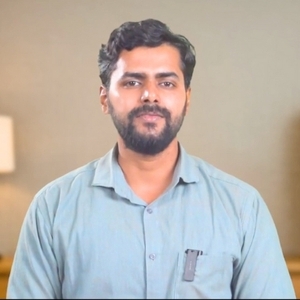
Rajas A. Vaishampayan
Course InstructorRajas A. Vaishampayan is a dedicated researcher and scholar specializing in the intersection of Archaeology, Sanskrit, and Integral Philosophy. With dual Master's degrees in Sanskrit and Archaeology, his academic foundation is complemented by prestigious scholarships and fellowships, including J R D Tata Scholarship, Justice K. T. Telang Fellowship, BORI-Infosys Fellowship and Kalicharan Puri Research Fellowship.
His recent work includes the landmark treatise Sri Aurobindo's Integral Philosophy of History, published by the Bhandarkar Oriental Research Institute in 2025. Rajas has a distinguished track record in cultural and historical research, having worked with institutions like Maharashtra State Board for the Creation of Marathi Encyclopedia and coordinated significant research projects funded by the ICHR. He also teaches History and allied subjects to students of competitive exams.
His unique ability to synthesize classical Indian perspectives with modern methodological frameworks makes him a vital voice in the study of ancient Indian heritage and its historical evolution.
Historical Span
Two Millennia at a Glance
16 dynasties · proportionally mapped across 2,000 years
Common Questions
What prior knowledge is required for this course?+
No prior academic background in Indian history is required. The course is designed for learners with a general interest in India's political past. Basic familiarity with Indian geography will be helpful but is not essential.
How long do I have access to the course materials?+
You receive lifetime access to all course videos and materials. Once enrolled, you can revisit the lectures at any time and at your own pace.
Will I receive a certificate upon completion?+
Yes. Upon completing the course, you will receive a certificate jointly issued by BharatVidya and the Bhandarkar Oriental Research Institute (BORI).
What is the format of the course?+
The course consists of pre-recorded video lectures (15 hours) that you can watch at your convenience. Each lecture is approximately one hour in duration. Total course workload including supplementary engagement is approximately 30 hours.
Can I access the course on mobile devices?+
Yes. The BharatVidya platform is fully responsive. You can access all course content on desktop, tablet, or mobile devices through your web browser.
Build Your Dynastic Map of India's Political Past
Trace how Indian polities rose, governed, and transformed—from the Gangetic plains to the Deccan, across two millennia of civilisational history.
15 hours · 15 lectures · Lifetime access · Certificate
By clicking on Continue, I accept the Terms & Conditions,
Privacy Policy