Short Course · Self-Paced
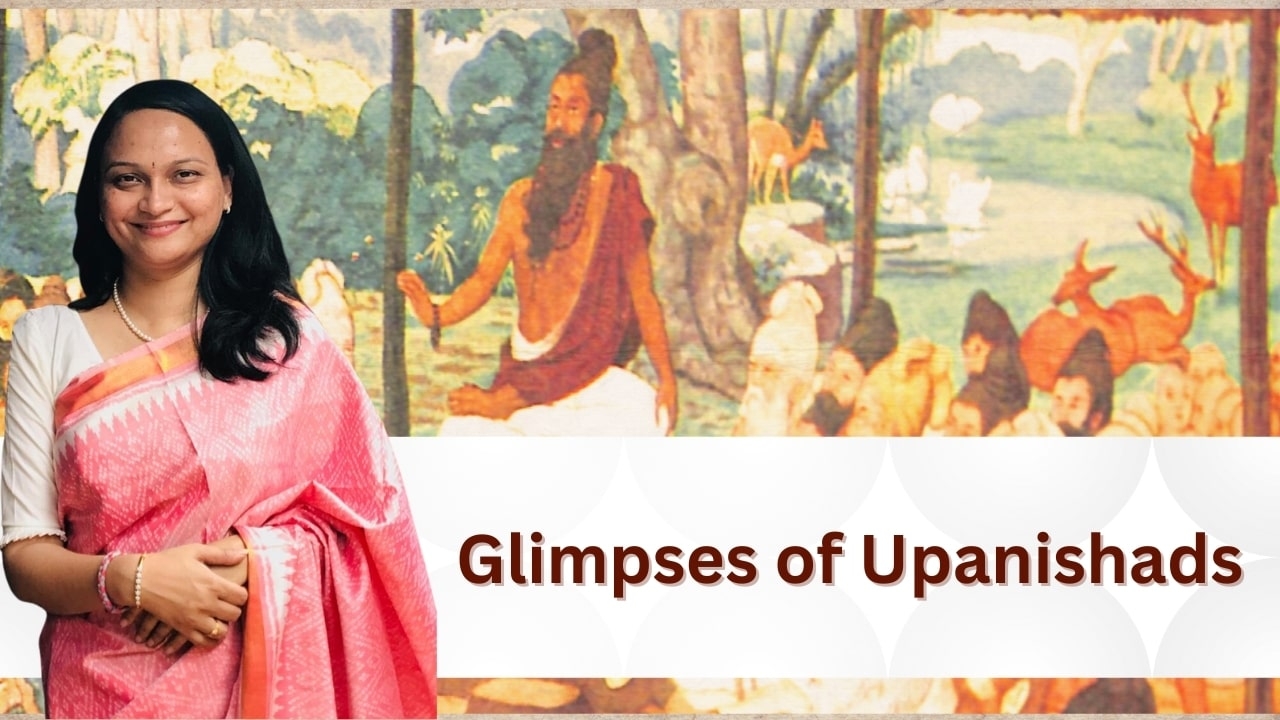
Glimpses ofUpanishads
An exploration of Vedic wisdom
An online course on Upanishads: explores the concepts of Brahman, Atman, and Jagat. Engages with philosophy related to life, death, and reality through timeless dialogues like Yama-Nachiketa and Aruni-Shwetaketu.
Course Overview
A Journey into Timeless Wisdom
Glimpses of Upanishads offers more than an introduction to ancient Vedic philosophy. Designed and delivered by Dr. Gauri Moghe, this course is a journey into the heart of Upanishadic wisdom.
Explore the nature of Brahman, Atman, and Jagat—the foundational concepts that have shaped Indian philosophical thought for millennia. Engage with profound questions concerning life, death, and the nature of reality.
Through celebrated stories such as the Yama-Nachiketa dialogue and the Aruni-Shwetaketu Samwaada, discover how the Upanishads transmit their deepest teachings through narrative and inquiry.
"For seekers at every stage of the journey."
Why Take This Course
What Makes This Course Special
Timeless Teachings
Gain insight into Upanishadic philosophy and its enduring relevance to contemporary life and modern seekers.
Expert Instruction
A well-structured, accessible course designed by a scholar with deep understanding of Vedic literature.
Flexible Learning
Access course material at your own pace, with the ability to revisit lessons anytime, anywhere.
Engaging Format
Clear explanations combined with thought-provoking discussions make the course both informative and enriching.
7 Lectures · 1h 13m
Complete Curriculum
A structured journey through Upanishadic wisdom
_(1).jpg)
Course Instructor
Dr. Gauri Moghe
M.A., Ph.D. in Sanskrit (Tantra Shastra)
Dr. Gauri Moghe currently serves as Executive Editor of the Mahabharata Cultural Index and head of the digital department at the Bhandarkar Oriental Research Institute, Pune.
Her research spans Tantra Shastra, the Mahabharata, Sanskrit grammar, and Sangita Shastra. Dr. Moghe has presented numerous papers at national and international seminars, and delivers lectures on subjects including the Mahabharata, Samaveda, Vedic literature, and the Shakta tradition.
Areas of Expertise
Common Questions
Do I need prior knowledge of Sanskrit or philosophy?+
No prior knowledge is required. This course is designed as an accessible introduction to Upanishadic thought, with all concepts explained clearly from first principles.
What are the Upanishads?+
The Upanishads are ancient Sanskrit texts that form the philosophical foundation of Hinduism. They explore fundamental questions about the nature of reality, consciousness, and the self through dialogues and teachings.
How long do I have access to the course?+
You have lifetime access to all course materials. Watch at your own pace, revisit any lecture, and return to deepen your understanding whenever you wish.
Is there a certificate?+
Yes, upon completing the course you will receive a certificate of completion from BharatVidya that you can share professionally.
Begin Your Exploration of Vedic Wisdom
From Brahman to Atman—discover the timeless teachings that have guided seekers for millennia.
7 lectures · 1h 13m · Lifetime access · Certificate included
By clicking on Continue, I accept the Terms & Conditions,
Privacy Policy